
Hospital furniture is a broad category of specialized equipment designed to meet the unique needs of healthcare environments, supporting patient care, medical workflows, and administrative operations. Unlike conventional furniture, each type of hospital furniture is tailored to withstand frequent use, facilitate infection control, and accommodate the diverse requirements of patients, medical staff, and visitors. From clinical wards to administrative areas, hospital furniture permeates every corner of a medical institution. This article will systematically classify and elaborate on the main types of hospital furniture, helping you gain a comprehensive understanding of its scope.
1. Ward Furniture: Core Support for Patient Care
The ward is the core area for patient treatment and recovery, and its furniture is primarily designed to ensure patient comfort, safety, and convenience while facilitating nursing work. Key types include:
1.1 Hospital Beds
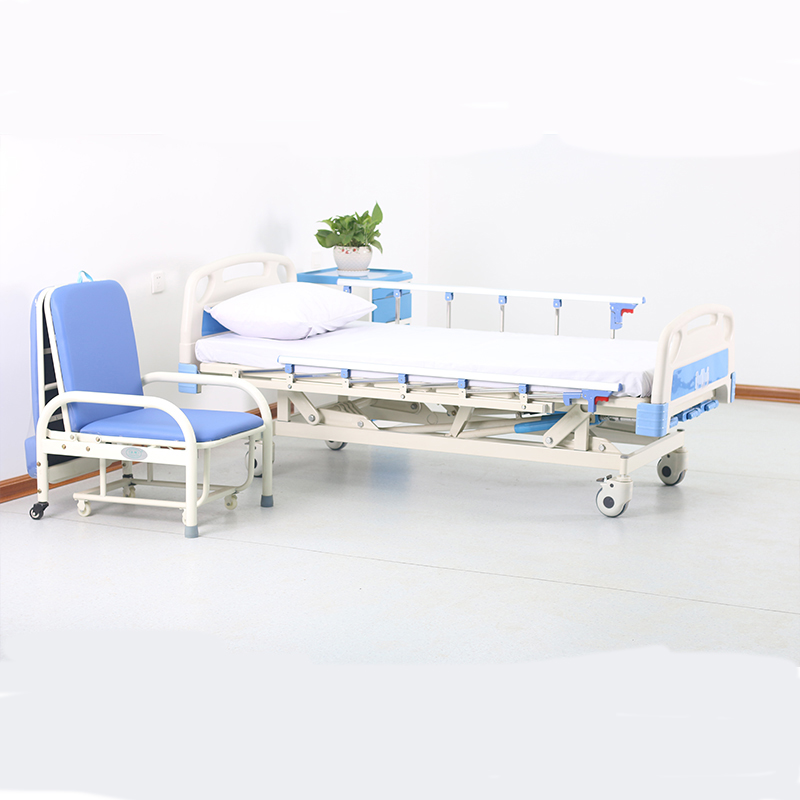
As the most essential furniture in the ward, hospital beds come in various types to adapt to different patient conditions. Standard hospital beds are equipped with adjustable backrest and leg height functions, allowing patients to switch between lying, sitting, and semi-reclining positions. Specialized beds include intensive care unit (ICU) beds with advanced functions such as weight monitoring, bed exit alarms, and adjustable height to match the working height of medical staff; pediatric beds with safety rails and child-friendly designs; and rehabilitation beds with side-turning functions to prevent pressure ulcers for long-term bedridden patients. High-quality hospital beds also feature anti-collision edges and easy-to-clean surfaces to meet infection control requirements.
1.2 Overbed Tables
Overbed tables are designed for patients to use while lying in bed or sitting on a chair. They typically have adjustable heights and telescopic arms, allowing patients to place meals, medications, books, or electronic devices within easy reach. The tabletop is usually made of non-porous, easy-to-clean materials such as stainless steel or laminate, ensuring hygiene and durability. Some overbed tables also have built-in storage compartments for small items, enhancing practicality.
1.3 Ward Cabinets
Ward cabinets are used to store patients’ personal belongings, medical supplies, and bedding. Common types include wardrobe cabinets for storing clothes, bedside cabinets placed next to hospital beds for convenient access to daily necessities and medications, and storage cabinets for nursing staff to store medical instruments and linen. Ward cabinets are designed with sealed doors to prevent dust accumulation, and the internal structure is often adjustable to meet different storage needs. The materials used are required to be moisture-proof, corrosion-resistant, and easy to disinfect.
1.4 Patient Chairs
Patient chairs in wards are designed for patients to sit and rest, and some can be converted into recliners or beds to meet the needs of accompanying family members. These chairs feature ergonomic designs with comfortable backrests and armrests, and the seat surfaces are made of breathable and easy-to-clean fabrics or leather. For patients with limited mobility, there are also specialized chairs with armrests that can be lifted to facilitate transfer from the bed to the chair.
2. Clinical and Treatment Area Furniture: Assisting Medical Workflows
Clinical and treatment areas (such as operating rooms, treatment rooms, examination rooms, and nurse stations) require furniture that supports precise medical operations, efficient work coordination, and strict infection control. Main types include:
2.1 Treatment Tables and Examination Beds
Treatment tables and examination beds are essential for various medical procedures such as physical examinations, injections, dressings, and minor surgeries. They are designed with adjustable heights and angles to adapt to different examination and treatment needs. The tabletop is usually made of high-quality stainless steel, which is corrosion-resistant, high-temperature resistant, and easy to disinfect. Some advanced examination beds are equipped with functions such as electric adjustment and foot switches, reducing the labor intensity of medical staff.
2.2 Nurse Station Desks
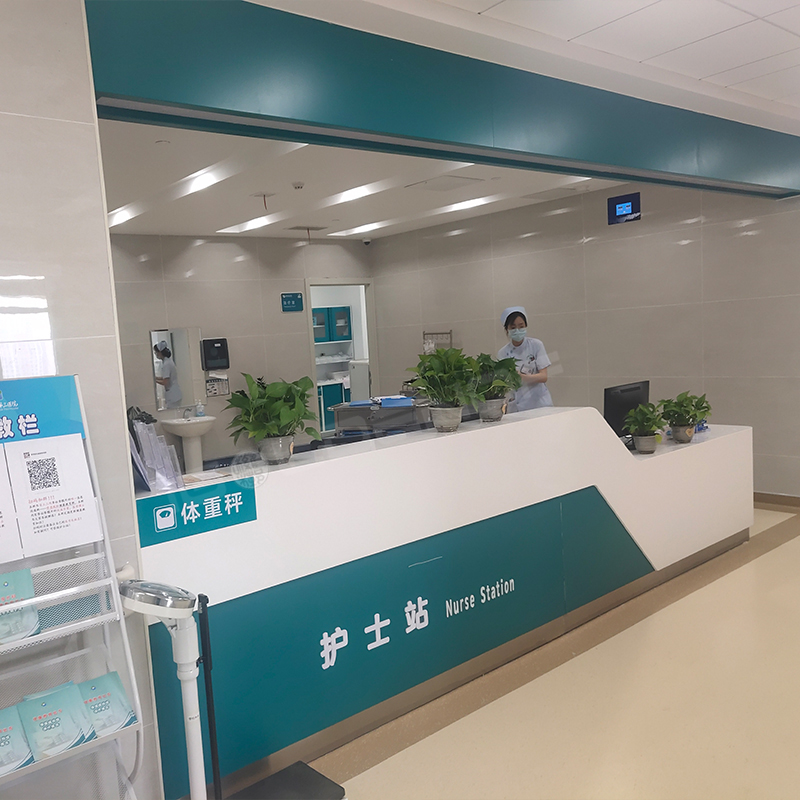
As the command center of the ward, nurse station desks integrate functions such as information recording, communication and coordination, and temporary storage of medical supplies. They are usually designed with large work surfaces to place computers, monitors, telephones, and medical records. The structure includes drawers, cabinets, and shelves for classified storage of items, and integrated cable management systems to keep the workspace tidy. The design also emphasizes visibility, allowing nurses to monitor the ward area at any time, while ensuring privacy for confidential conversations.
2.3 Medical Storage Cabinets and Racks
Clinical areas require a large number of storage cabinets and racks to store drugs, medical instruments, sterile supplies, and specimens. Drug storage cabinets are often equipped with temperature and humidity control functions to ensure the quality of drugs; instrument cabinets are designed with anti-static and dust-proof features to protect precision medical instruments; sterile supply racks are used to store and display sterile dressings and instruments, facilitating quick access. These storage facilities are made of materials that meet medical hygiene standards and are easy to clean and disinfect.
2.4 Operating Room Furniture
Operating room furniture is specialized for surgical operations, including operating tables, instrument tables, Mayo stands, and anesthetic carts. Operating tables are highly adjustable, allowing surgeons to set the patient’s position accurately for different surgical procedures. Instrument tables and Mayo stands are used to place surgical instruments and supplies, with smooth surfaces and easy-to-clean designs. Anesthetic carts are equipped with storage compartments for anesthetic drugs and equipment, and some have locking functions to ensure the safety of drugs.
3. Public Area Furniture: Enhancing Visitor Experience
Public areas in hospitals (such as waiting rooms, lobbies, corridors, and canteens) require furniture that is durable, comfortable, and able to accommodate a large number of people. Main types include:
3.1 Waiting Room Chairs
Waiting room chairs are usually arranged in rows for visitors and patients waiting for consultations or examinations. They are designed to be sturdy and durable to withstand high traffic, with comfortable seat cushions and backrests to reduce fatigue during long waits. The materials are easy to clean and maintain, and the design often avoids dead corners to facilitate hygiene management. Some waiting room chairs are equipped with armrests and cup holders for added convenience.
3.2 Lobby Reception Desks
Lobby reception desks are the first point of contact for visitors and patients, used for registration, information inquiry, and guidance. They are designed to be professional and welcoming, with large work surfaces for staff to handle documents and computers. The structure includes storage space for materials and equipment, and the height is suitable for both standing and sitting staff. The appearance design is often consistent with the overall style of the hospital, creating a good first impression.
3.3 Dining Area Furniture
Dining area furniture in hospitals includes dining tables and chairs for patients, staff, and visitors. Dining tables are usually made of easy-to-clean materials such as stainless steel or laminate, with smooth surfaces that can be quickly wiped and disinfected. Chairs are designed for comfort and stability, and the height matches the dining tables. The layout of dining area furniture ensures smooth traffic flow and sufficient seating space.
4. Administrative and Support Area Furniture: Ensuring Daily Operations
Administrative and support areas (such as doctor’s offices, administrative offices, pharmacies, and laboratories) require furniture that supports office work, drug management, and experimental operations. Main types include:
4.1 Office Furniture
Office furniture in hospitals includes desks, chairs, filing cabinets, and bookcases for doctors, nurses, and administrative staff. These furniture items are designed with ergonomics in mind to ensure staff comfort during long working hours. Desks have sufficient work space and storage compartments; chairs have adjustable heights and backrests to reduce musculoskeletal fatigue; filing cabinets are used to store medical records, administrative documents, and other materials, with locking functions to ensure data security.
4.2 Pharmacy Furniture
Pharmacy furniture is specialized for drug storage, dispensing, and management, including drug shelves, dispensing tables, and medicine cabinets. Drug shelves are designed with adjustable layers to accommodate different sizes of drug packages, and some are equipped with lighting and labeling systems to facilitate drug retrieval. Dispensing tables have large work surfaces and storage space for dispensing tools and materials. Medicine cabinets are often made of glass doors for easy observation of drug inventory, with sealed designs to keep drugs dry and clean.
4.3 Laboratory Furniture
Laboratory furniture in hospitals (such as clinical laboratories) includes experimental tables, reagent cabinets, and sample storage cabinets. Experimental tables are made of corrosion-resistant and chemical-resistant materials (such as epoxy resin) to withstand the erosion of various reagents and solvents. They are equipped with sinks, faucets, and power sockets to meet experimental needs. Reagent cabinets and sample storage cabinets have temperature and humidity control functions to ensure the stability of reagents and samples.
Conclusion
Hospital furniture covers a wide range of types, each tailored to the specific needs of different functional areas in medical institutions. From ward beds that support patient recovery to nurse station desks that coordinate medical workflows, from waiting room chairs that enhance visitor experience to laboratory tables that assist in scientific research, every type of hospital furniture plays an irreplaceable role in ensuring the smooth operation of hospitals and improving the quality of patient care. As a professional hospital furniture manufacturer, igoldenof focuses on the particularity of the medical environment, integrating principles such as safety, infection control, and ergonomics into the design and production of various hospital furniture, providing comprehensive and high-quality furniture solutions for global medical institutions.