
Hospital furniture and ordinary furniture both fall under the broad category of furniture, but they differ significantly in multiple core aspects due to distinct usage scenarios, functional requirements, and environmental demands. As a professional medical furniture manufacturer, we deeply understand these differences, which directly guide the design, production, and application of high-quality hospital furniture. Below is a detailed analysis of the key distinctions.
1. Color Selection Differences
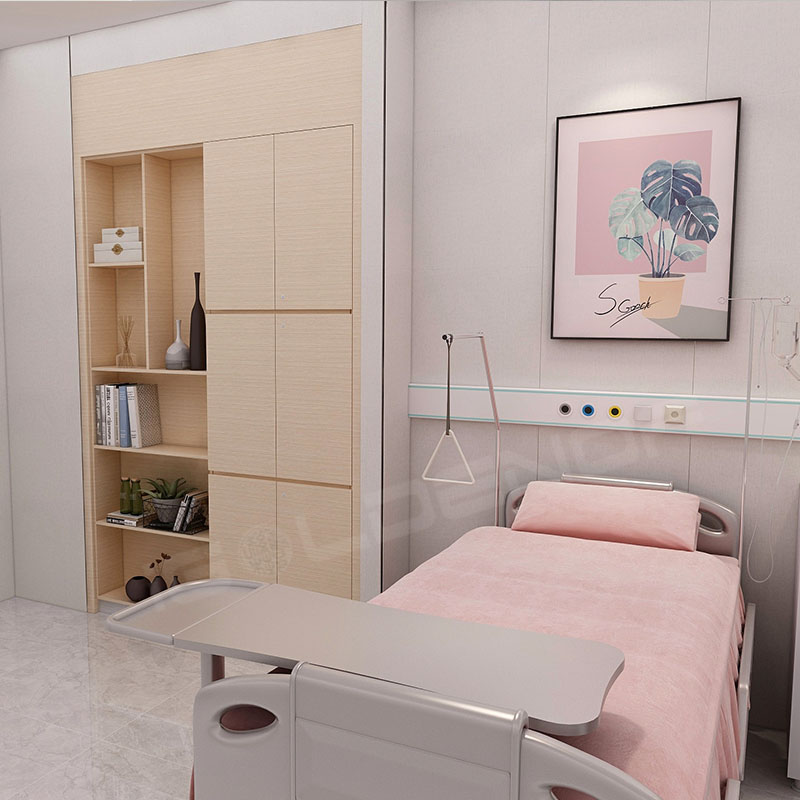
Color requirements vary drastically based on usage environments. Ordinary furniture is typically selected according to personal preferences and family aesthetic needs, allowing for diverse, personalized color schemes. In contrast, hospital furniture must align with the hospital’s overall brand image and the psychological needs of patients. Warm tones are generally preferred, as they enhance environmental affinity, soothe patients’ tense emotions, and create a reassuring medical atmosphere—an essential part of humanistic care in healthcare settings.

2. Material Selection Differences
Material standards differ greatly due to varying functional demands. Ordinary furniture focuses on basic performance such as moisture resistance and temperature resistance, with relatively lower fire resistance requirements. hospital furniture has far stricter material criteria: it is more environmentally friendly than ordinary furniture, and on this basis, it must possess strong chemical resistance. It also needs to ensure excellent anti-corrosion, moisture-proof, fire-proof, and mold-proof properties. Most importantly, medical furniture materials must have anti-infection capabilities to prevent cross-contamination, a critical requirement in medical environments.
3. Production Requirement Differences
Ordinary furniture emphasizes aesthetic appeal and basic usability, balancing beauty and daily functionality. hospital furniture, while also pursuing a clean, professional appearance, prioritizes high-quality raw materials, easy operation, and convenient disassembly. These features facilitate daily cleaning and maintenance, adapt to dynamic space adjustments in hospitals, and meet the efficient workflow needs of medical staff.
4. Layout Differences
Layout principles are driven by different core goals. Ordinary furniture layout focuses on personal and family lifestyle needs, emphasizing the orientation of furniture placement and coordination with home decor to create a comfortable living space. For hospital furniture, layout is first based on the functionality of different departments and medical process planning. The core objectives are to improve the work efficiency of medical staff, optimize patient flow, and effectively prevent cross-infection through scientific spatial arrangement.
5. Design Concept Differences
Ordinary furniture design leans toward diversified colors, trendy styles, and flexible use to cater to individual aesthetic preferences and diverse home environments. hospital furniture design, while incorporating partial practical characteristics of ordinary furniture, has a more comprehensive and specialized concept. The top priority is to fully meet the special functional needs of different departments (e.g., wards, consulting rooms, medical technology areas). Additionally, its design must align with the hospital’s overall workflow and spatial logic to realize the integration of functionality and humanism.
6. Style Coordination Differences
Style matching follows different criteria. Ordinary furniture mainly coordinates with the interior decoration style of the home to create a unified, harmonious residential atmosphere. hospital furniture style needs to integrate with multi-dimensional elements such as the hospital’s overall building design, indoor space environment, and departmental functional positioning. This multi-angle coordination ensures that furniture blends seamlessly into the healthcare space, while maintaining a professional, consistent visual image of the hospital.
These differences highlight the professionalism and particularity of hospital furniture. As a trusted manufacturer, we adhere to medical-grade standards, integrating these characteristics into every link of design and production to provide safe, practical, and humanistic furniture solutions for hospitals worldwide.